Short answer
Start from your menu: count chilled and ambient ingredients, then compare machines on channel count, storage temperature, dosing speed and tolerance, cleaning routine, connectivity, footprint and electrical supply.
1. Ingredient channels #
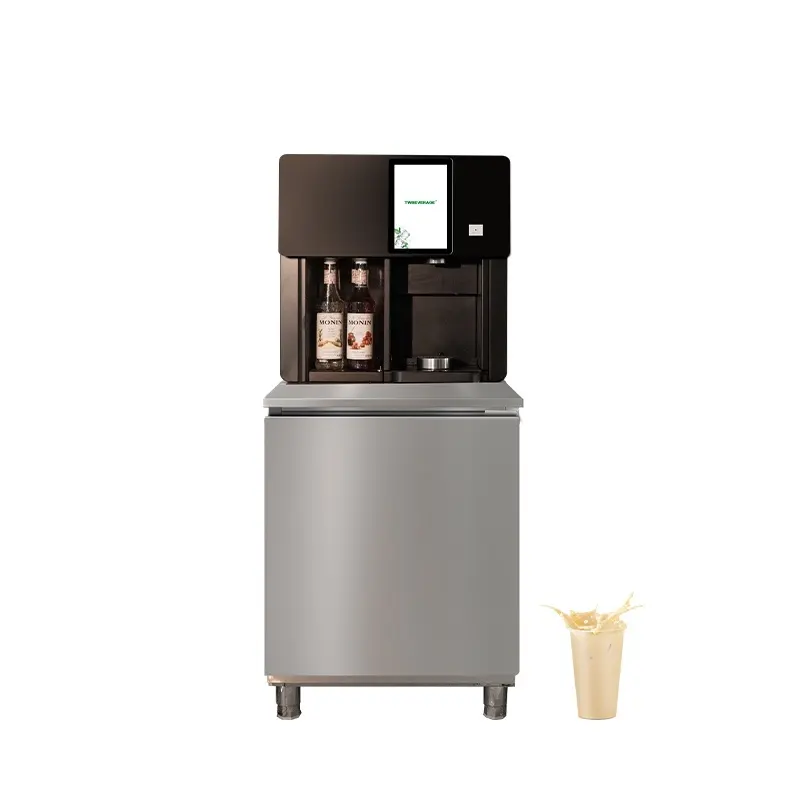
List every liquid in your top recipes. The MC12F holds 8 refrigerated, 4 room-temperature ingredients and fructose; the M77-C8 is dedicated to 8 refrigerated ingredients such as milk.
2. Storage temperature #
Dairy and fresh tea bases need cold storage. The workstations in our range list 2–8 °C storage.
3. Dosing speed and tolerance #
Speed affects queue time; tolerance affects taste consistency. Listed figures: 25 ml/s (M77-C8, MC15F, MC17F), 30 ml/s per pump (MC12F), ±5% tolerance (M77-C8, MC12F).
4. Cleaning #
Auto-clean functions are listed on the M77-C8, MC12F and MC15F. Ask for the cleaning procedure and consumables in writing.
5. Connectivity #
IoT and app control (listed on the M77-C8 and MC12F) let multi-store operators push recipes and monitor machines. Check network requirements and data hosting.
6. Footprint and format #
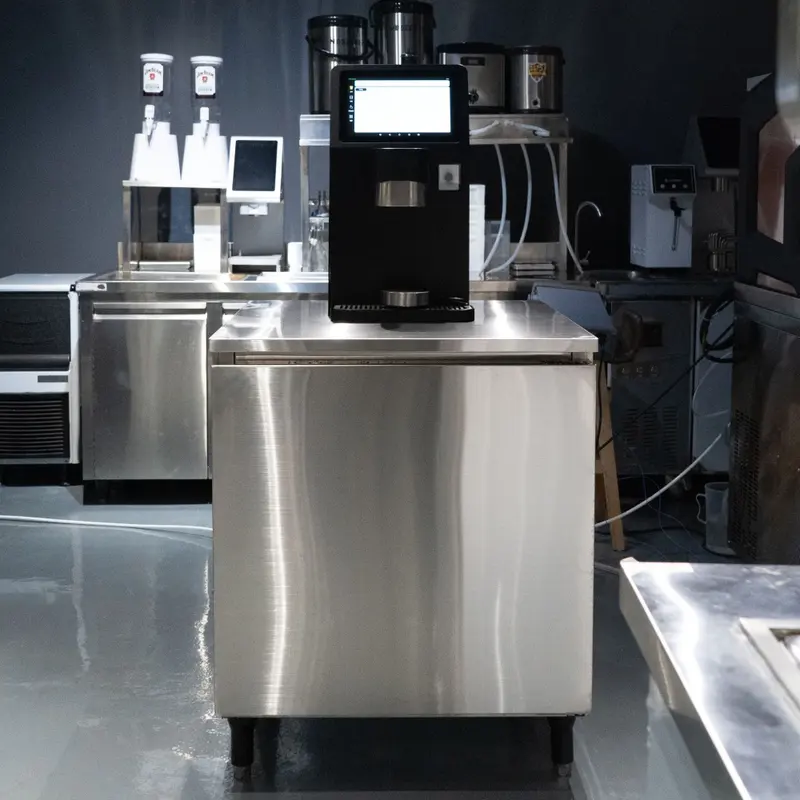
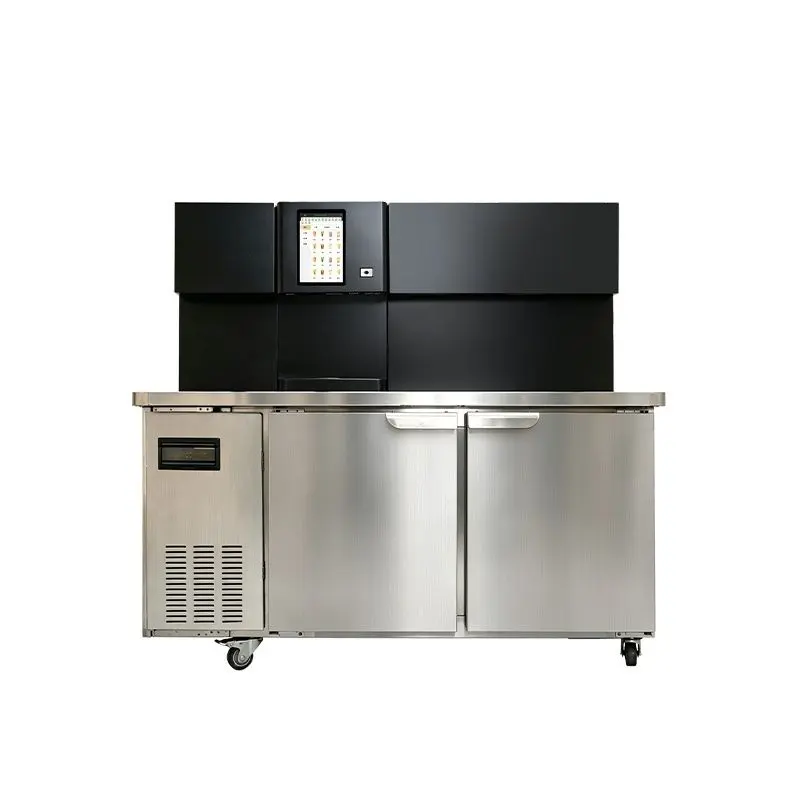
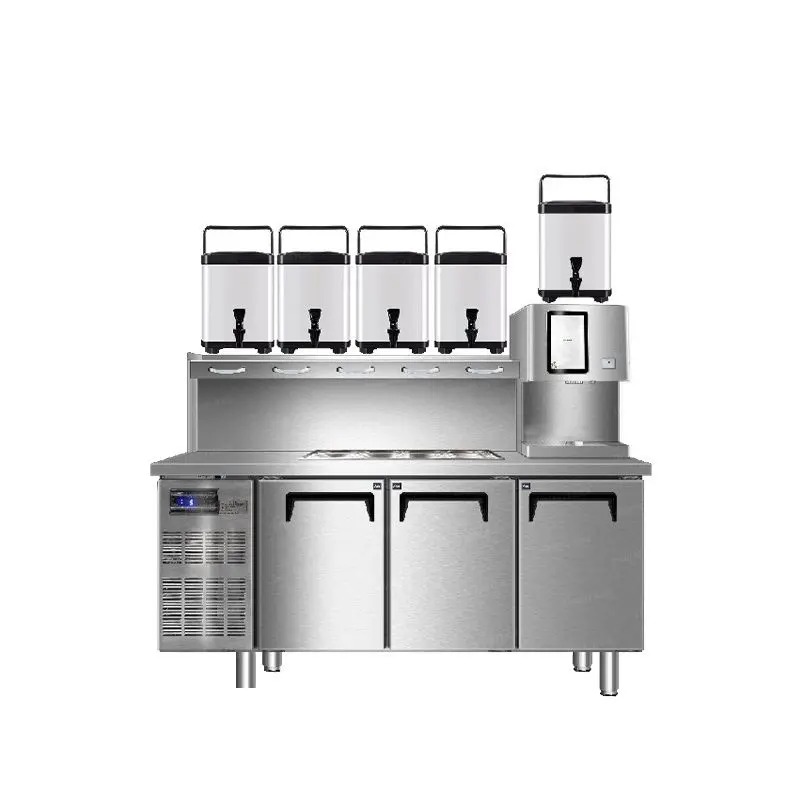
Compact towers (MC12F, 600 × 700 mm) suit small shops; integrated counters (MC15F 1.5 m, MC17F 1.8 m) combine prep, storage and dispensing.
7. Power and ventilation #
Listed power ranges from 330 W (MC12F) to 3 kW (MC15F). R290 units require ventilation clearance. Confirm 220–240 V or 110 V and plug type for your country.
Product figures in this article are taken from our model specifications. Regulatory information is general guidance, not legal advice — confirm requirements with your local authority or compliance adviser.